
ALONG MEXICO'S COSTALEGRE


Meet Arroyo seco
A THRIVING ECOSYSTEM ON THE JALISCO COAST

The wild heart of costalegre
Where Highway 200 gives way to a dirt road shaded by palm and dry-forest canopy sits Arroyo Seco, one of the last unspoiled corners of Jalisco's Costalegre coast. This is where Xochiraíz has planted its roots: on a stretch of tropical dry forest and beachfront where regeneration isn't a marketing word, it's the daily work.
Arroyo Seco is a small coastal community between Puerto Vallarta to the north and Manzanillo to the south. Unlike the resort corridors of Vallarta or Nuevo Vallarta, Costalegre has stayed rural and low-key: fishing villages, mountain ridgelines dropping straight into the Pacific and long stretches of beach. It's remote enough that cell signal is patchy and the roads are still dirt — which is precisely why the land here has stayed intact.
The broader Costalegre region has long been known for ecotourism, surf and a slower pace than its more developed neighbors. A new international airport at Chalacatepec has begun to open the region up, but much of Costalegre, including Arroyo Seco, remains defined by what it doesn't have: high-rises, crowds, and paved-over coastline.
That's the setting Xochiraíz works within. A place where regenerative land practices can still make a real, visible difference, and where a small cohort of students can see an entire watershed, forest and coastline in the same afternoon.

Fauna
The dry forest and coastline of Arroyo Seco support a high number of endemic species — animals found only in this stretch of Pacific Mexico.

Mammals
A fifth of the region's mammal species occur nowhere else, including the Mexican shrew, the trumpet-nosed bat, and several endemic rodents adapted to dry-forest life. Coatis, deer, and other more widely ranging mammals also move through the forest and along the coastal scrub.

X
coati

Wild Cats
The dry forest is also home to wild cats, most notably the ocelot. Radio-tracking studies in the nearby Chamela-Cuixmala Biosphere Reserve, part of the same coastal Jalisco ecoregion, have followed resident ocelot populations there, alongside the smaller, tree-climbing margay.

X
ocelot
Sea Turtles
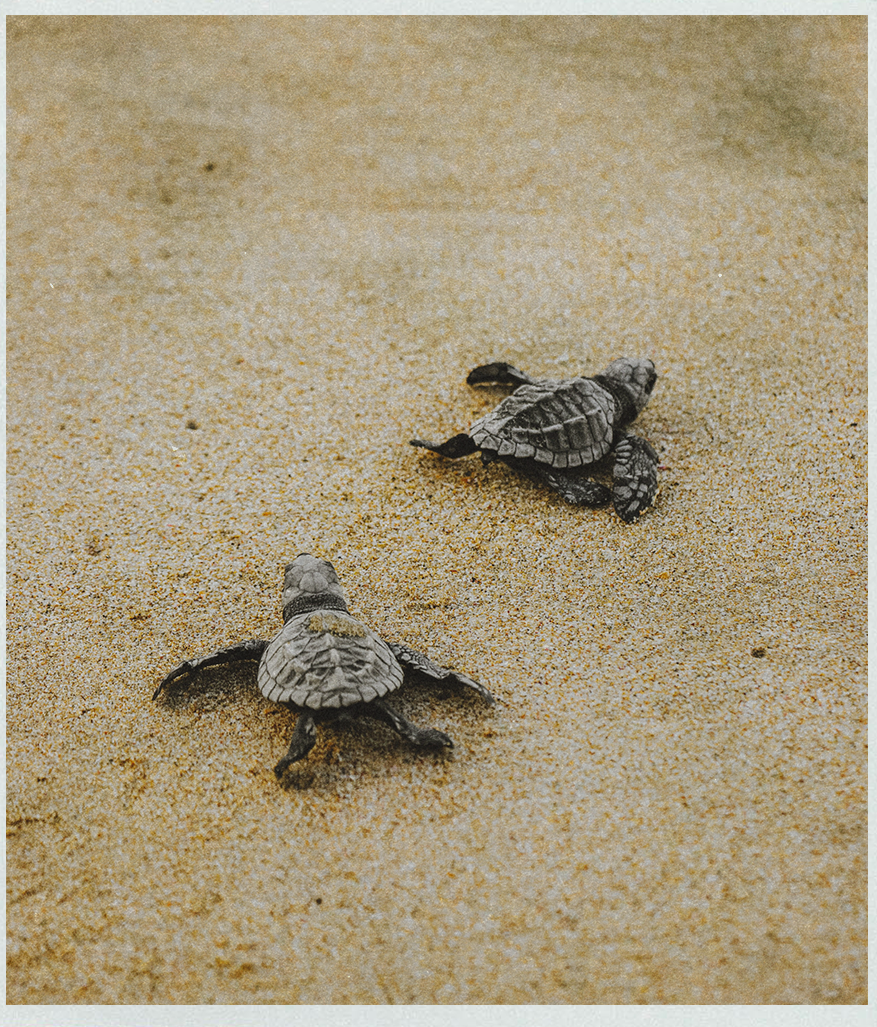
The beaches around Arroyo Seco and the broader Costalegre coastline are seasonal nesting grounds for species including the olive ridley, and local sanctuaries along the coast run hatchling protection and release programs during nesting season.

Whales
December through March, humpback whales travel south along Mexico's Pacific coast to breed and calve in warm coastal waters. That migratory corridor runs the length of the Costalegre coastline, making whale sightings from shore a seasonal certainty in Arroyo Seco.

Birds
Around 300 bird species use this ecoregion, from year-round residents like the San Blas jay and rufous-bellied chachalaca to Nearctic migrants that winter here each year. Farther inland along the Costalegre, wildlife centers work to rehabilitate military macaws, one of the region's most visible and threatened parrot species.

X
military macaw

Reptiles
Jalisco's dry forest reserves have catalogued around 68 reptile species, with more than half found nowhere else. Species documented in the ecoregion include the American crocodile, boa constrictors and several native gecko and iguana species that move between the forest floor and canopy.

X
crocodile
Flora
Arroyo Seco sits inside one of the most biologically rich and most endangered forest types in the Neotropics, and only a small fraction of it remains protected today. Nearby Chamela-Cuixmala Biosphere Reserve, part of the same ecoregion, is one of the best-studied examples of what this landscape can look like when it's left intact.
Canopy
A mature dry forest here layers up to 30 meters high. The upper canopy includes hardwoods like Mexican mahogany (Swietenia humilis), Astronium graveolens, and the fig species Ficus cotinifolia, while a lower tree layer of Cordia alliodora and spiny legumes like Caesalpinia eriostachys fills in beneath.

Cacti
Columnar and tree-like cacti are a signature of this landscape, including species of Pachycereus, Stenocereus, and Cephalocereus, alongside the tree-form prickly pear Opuntia excelsa.

X
Opuntia excelsa
Rare Species
The ecoregion is home to many plants found nowhere else, including Magnolia vallartensis, a critically endangered tree restricted to humid streamside forests near Puerto Vallarta — a reminder of how narrowly distributed, and how vulnerable, much of this flora really is.


Edible Species
Native plants have fed people here for generations, including ciruela/jocote (Spondias purpurea), a native dry-tropics plum eaten fresh or in preserves; nanche (Byrsonima crassifolia), a tangy native fruit used in drinks and desserts; and pitaya, the wild-harvested fruit of the region's own Stenocereus cacti.
